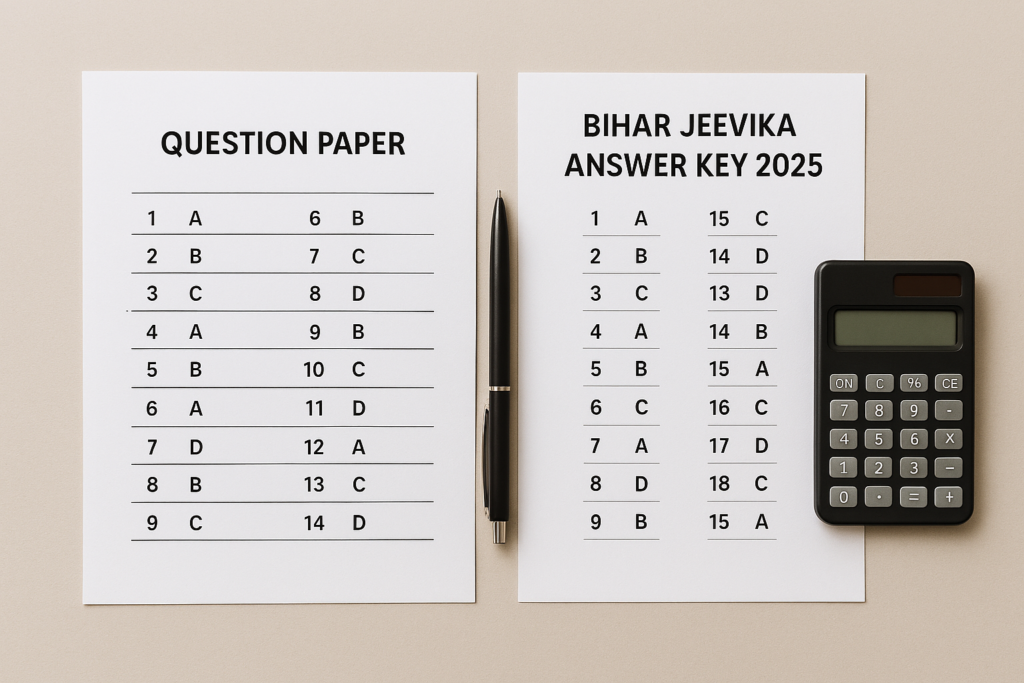
The Jeevika Answer Key helps candidates understand their exam performance before the final result. This detailed guide explains how to use the answer key, calculate scores, and take the right next steps.
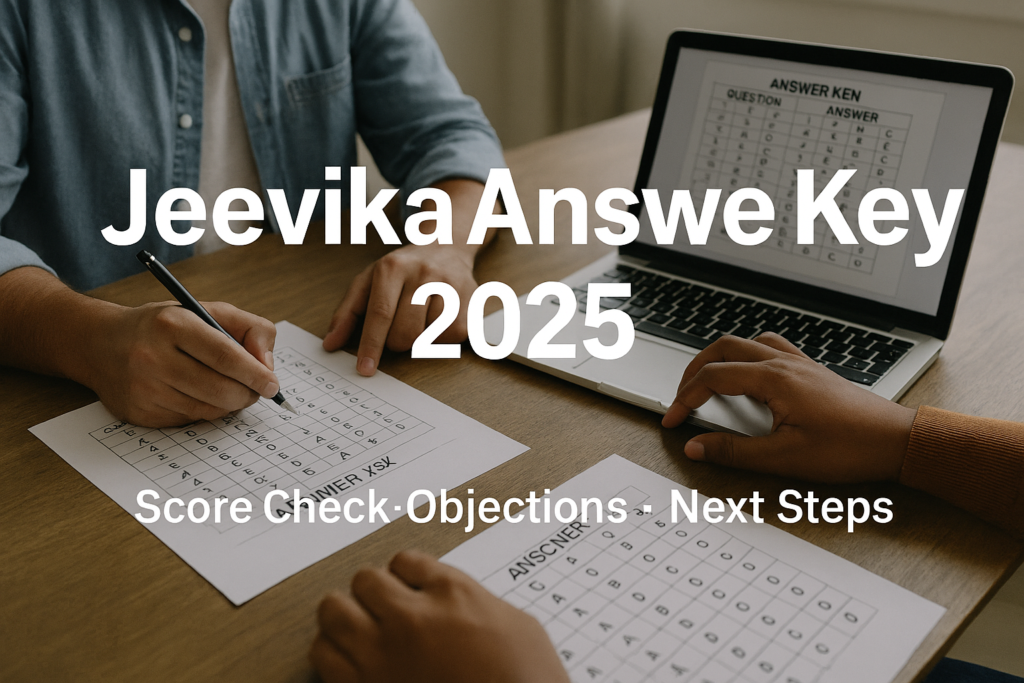
Table of Contents
Introduction
For thousands of candidates who appeared in the Bihar Jeevika recruitment exam, the release of the Jeevika answer key marks a crucial turning point. The exam may be over, but clarity about performance begins only now.
Unlike results, which arrive weeks later, the answer key gives candidates an early, transparent window into how they actually performed. It allows you to estimate your score, identify errors, and—most importantly—decide whether to challenge any answers.
In this blog, you will learn:
What the Jeevika answer key really tells you
How to calculate your expected score accurately
When and how objections matter
Common mistakes candidates make at this stage
How this step affects the final result
This is not just about checking answers.
It’s about taking control of your outcome.
What Is the Jeevika Answer Key and Why It Matters
At a basic level, the Jeevika answer key is an official document released by the recruiting authority that lists the correct answers to questions asked in the exam.
But from an expert perspective, it serves a much deeper purpose.
Why the Answer Key Is Powerful
It introduces transparency into the evaluation process
It allows candidates to self-audit performance
It gives a fair chance to correct genuine errors
It builds trust between candidates and the system
In competitive exams like Bihar Jeevika recruitment, this step ensures that the final merit list is not a black box.
Types of Jeevika Answer Keys Released
Many candidates assume there is only one answer key. That’s not always true.
Common Formats
Provisional Answer Key
Released first
Open for objections
Subject to change
Final Answer Key
Released after objections are reviewed
Forms the basis of result preparation
Cannot be challenged
Important Insight
Most changes, if any, happen between the provisional and final key. Ignoring the provisional phase means losing your only chance to raise concerns.
How to Use the Jeevika Answer Key Correctly
Checking answers casually is not enough. There is a structured way to benefit from it.
Step-by-Step Method
Download the correct answer key set
Match your question paper code
Compare each response calmly
Mark correct, incorrect, and doubtful answers
Practical Tip
Do this exercise in one sitting. Half-checking over multiple days increases confusion and emotional bias.
Score Calculation: Estimating Your Marks the Right Way
This is where analysis beats assumption.
What You Need Before Calculation
Marking scheme
Negative marking rules (if any)
Your recorded responses
Sample Score Calculation Table
| Response Type | Number | Marks per Question | Total |
|---|---|---|---|
| Correct | 42 | +1 | 42 |
| Incorrect | 8 | -0.25 | -2 |
| Unattempted | 10 | 0 | 0 |
| Estimated Score | 40 |
This gives a realistic expectation, not a hopeful guess.
What a “Good Score” Actually Means in Jeevika Exams
Here’s where many candidates misunderstand performance.
A good score is not universal. It depends on:
Number of vacancies
Exam difficulty
Category-wise competition
Normalization (if applied)
Case Example
In a previous Jeevika recruitment cycle, candidates with similar raw scores saw different outcomes due to category cut-offs and post preferences.
Your score must be viewed in context, not isolation.
Why Objection Window Is More Important Than It Looks
The objection phase is not symbolic. It has real consequences.
When Should You Raise an Objection?
When the answer key contradicts standard textbooks
When multiple options appear correct
When the question itself is ambiguous
When NOT to Object
Based on coaching notes alone
Based on guesswork
Because your answer doesn’t match
Strong objections are factual, not emotional.
Common Mistakes Candidates Make With Answer Keys
This stage is where disciplined candidates separate themselves.
Mistakes to Avoid
Panic over a few wrong answers
Ignoring objection deadlines
Comparing scores blindly with others
Assuming cut-off trends too early
The answer key is a tool, not a verdict.
Jeevika Answer Key vs Final Result: Understanding the Gap
Many candidates ask:
“If I know my score, why wait for the result?”
Here’s why.
Differences Explained
| Aspect | Answer Key | Final Result |
|---|---|---|
| Purpose | Self-evaluation | Official ranking |
| Editable | Yes (provisional) | No |
| Final Authority | No | Yes |
| Includes normalization | No | Yes |
Understanding this gap prevents disappointment later.
Why This Stage Tests Mental Strength More Than Knowledge
The exam tested your preparation.
The answer key tests your patience and judgment.
Candidates who handle this phase calmly:
Make better objections
Prepare for next stages early
Avoid emotional burnout
Those who panic often lose focus — even if their score is decent.
How to Raise Objections Using the Jeevika Answer Key
The objection window is the only formal opportunity candidates get to challenge incorrect answers. Missing this stage means accepting the answer key as final—even if it contains errors.
When Objections Truly Matter
Not every mismatch deserves an objection. Strong objections usually fall into these categories:
Official syllabus contradicts the given answer
Two options are equally valid
Question language is ambiguous or misleading
Answer key ignores standard reference material
Actionable Steps to File Objections
Identify the exact question number and set
Collect textbook or syllabus-based proof
Write a clear, factual explanation
Submit objections before the deadline
Expert Tip
Short, evidence-backed objections are taken more seriously than emotional or lengthy justifications.
What Happens After Objections Are Submitted?
Many candidates assume objections disappear into a void. That’s not true.
Evaluation Process (Behind the Scenes)
Subject experts review each objection
Valid points lead to answer corrections
Marks are revised wherever applicable
Final answer key is prepared
Case Insight
In past recruitment cycles, multiple questions were dropped or modified after expert review—directly impacting merit rankings.
This is why the Jeevika answer key stage can change outcomes.
Post-Answer-Key Strategy: What Smart Candidates Do
The smartest candidates use this waiting period wisely.
Productive Actions
Begin document preparation
Track expected cut-off ranges
Prepare for verification stages
Stay updated without obsession
Mistake to Avoid
Do not freeze your preparation waiting for results. Momentum matters.
Interpreting Cut-Off Trends After Answer Key Release
Cut-offs are not fixed numbers. They evolve.
Factors That Shape Cut-Offs
Number of corrected questions
Overall candidate performance
Category-wise reservation
Vacancy-to-applicant ratio
Practical Example
A slightly higher cut-off may still benefit candidates if difficult questions are dropped, increasing average scores.
Emotional Discipline: The Hidden Competitive Advantage
This phase tests temperament more than talent.
Candidates who:
Over-check answers
Compare excessively
Obsess over predicted scores
Often drain mental energy unnecessarily.
Healthy Approach
Check once, calculate once
Trust the process
Focus on what you can control
Emotional stability is an underrated exam skill.
What If You Don’t Raise Any Objection?
That’s perfectly okay—if your answers align clearly with the key.
Situations Where Objections Aren’t Needed
Clear syllabus-based questions
Well-defined single-correct answers
No ambiguity or contradiction
Raising objections without merit rarely helps and sometimes distracts.
Final Answer Key vs Result: What Changes and What Doesn’t
Once the final answer key is released:
Marks become final
Rankings are calculated
Merit list preparation begins
What Does NOT Change
Your responses
Exam difficulty
Vacancy count
The final answer key locks the evaluation.
Why the Jeevika Answer Key Process Improves Fairness
From an EEAT perspective, answer keys serve as a checks-and-balances system.
Benefits to Candidates
Transparency in evaluation
Opportunity to correct mistakes
Reduced arbitrariness
Increased trust in results
This process protects honest candidates.
Frequently Asked Questions (FAQs)
1. Is the Jeevika answer key final?
No. The provisional key can be challenged. Only the final key is binding.
2. Can all candidates raise objections?
Yes, within the official objection window.
3. Is there a fee for raising objections?
Usually yes, per question, refundable if the objection is accepted.
4. Will I get a response to my objection?
Individual responses are rare, but valid objections reflect in the final key.
5. Can marks increase after objections?
Yes, if an answer is corrected or a question is dropped.
6. What if I miss the objection deadline?
You must accept the final answer key as is.
7. Are coaching institutes’ answers reliable?
They can guide, but official textbooks and syllabus matter more.
8. Does answer key guarantee selection?
No. Selection depends on final merit ranking and vacancies.
Conclusion
The Jeevika answer key is not just an information release—it’s a decision point.
Handled wisely, it helps you:
Understand your real standing
Protect your rightful marks
Prepare confidently for the next stage
Candidates who treat this phase seriously often gain an edge over equally prepared peers.
Call to Action (Inspirational CTA)
Every exam journey has a pause before the result.
Use this pause to reflect, not panic.
Stay disciplined, stay informed, and trust the process—your effort has already done more than you realize.