This guide explains the real meaning behind the CUET UG 2026 advisory issued by NTA, how it affects candidates appearing in the May exam, why such advisories are released months in advance, and how aspirants should practically respond. You’ll also learn from real scenarios, expert analysis, common mistakes, and actionable preparation steps to avoid last-minute panic.
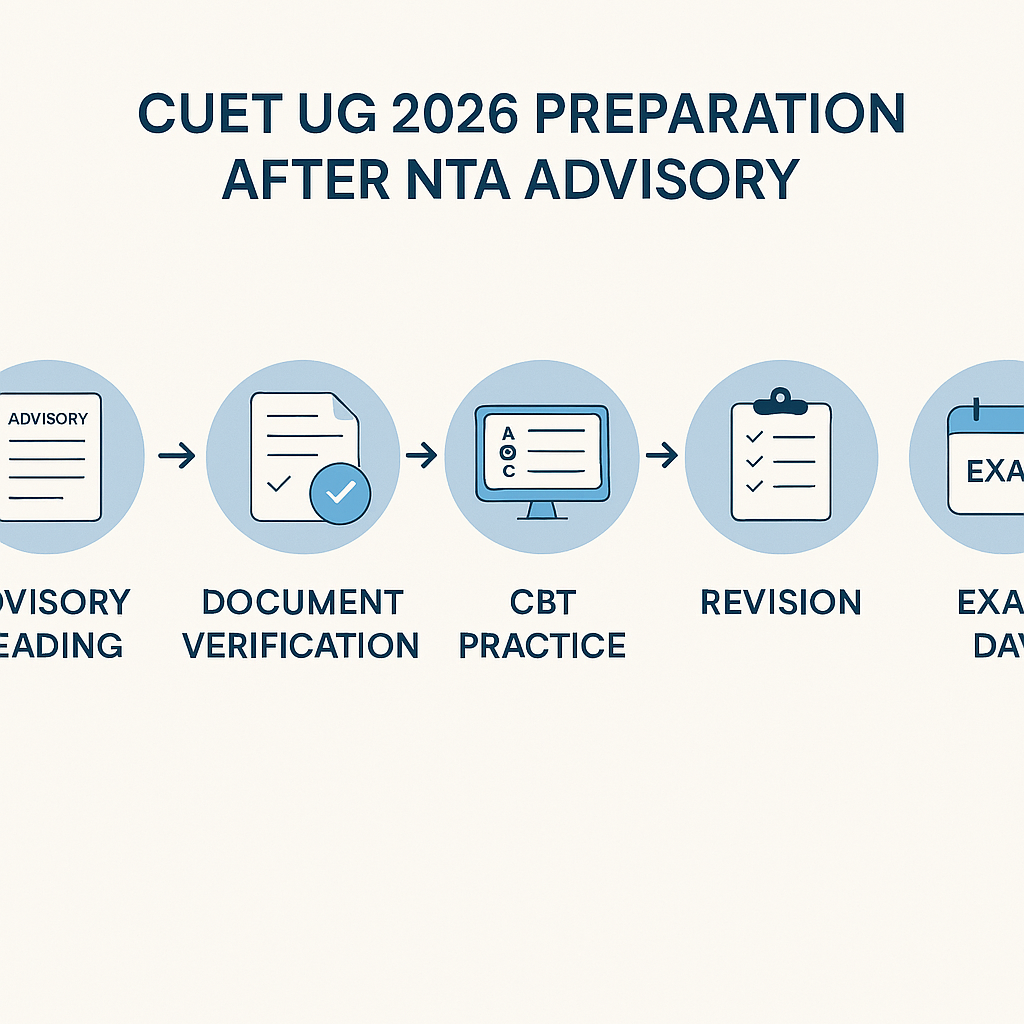
Table of Contents
Introduction: Why CUET UG 2026 Is No Longer a “Simple Entrance Exam”
When CUET was first introduced, many students believed it would be “easier than board exams” or “just a formality.” Fast forward to 2026, and that assumption has completely collapsed.
The CUET UG 2026 exam has evolved into:
A highly standardized national-level test
A filtering mechanism for top central universities
A system that prioritizes process discipline, not just marks
That’s exactly why the NTA advisory ahead of the May exam is so important. Advisories are not routine notices—they are early warning signals.
Why NTA Issues Advisories Before CUET UG Exams
Most students read advisories casually. Serious aspirants read them strategically.
The Real Purpose of an NTA Advisory
An advisory is issued to:
Prevent large-scale candidate errors
Reduce exam-day disruptions
Protect the integrity of the examination process
In simple terms, NTA issues advisories because mistakes repeat every year—and cost students an entire academic year.
Understanding the CUET UG 2026 Advisory: What’s Between the Lines
While advisories appear informational on the surface, they usually indicate:
Past exam-day issues
Systemic problems observed in earlier cycles
New compliance expectations from candidates
Expert Insight
Whenever NTA highlights something before the exam, it usually means:
“This caused problems earlier. Don’t ignore it again.”
That’s the mindset aspirants must adopt.
How CUET UG 2026 Has Changed the Admission Landscape
Earlier, admissions depended on:
Board marks
Internal university cut-offs
Now, CUET has introduced:
Uniform competition
Centralized evaluation
Reduced subjective bias
This makes CUET UG 2026 less forgiving of casual preparation and careless form handling.
A Real Scenario: How One Small Mistake Cost a Full Year
Consider this common case from previous CUET cycles:
A student:
Prepared well academically
Scored decently in mocks
Ignored advisory instructions
On exam day:
Faced document mismatch
Lost entry time
Performance dropped drastically
Result: Missed admission despite capability.
Lesson: In CUET, procedural discipline is as important as preparation.
What CUET UG 2026 Aspirants Should Focus on Right Now
Instead of reacting emotionally to advisories, aspirants should act logically.
Immediate Action Checklist
Re-check registration details
Verify document consistency
Align preparation with exam format clarity
Follow official instructions word-by-word
These steps may seem basic—but they protect your effort.
Data Insight: Where Most CUET Candidates Go Wrong
Based on trend analysis from previous cycles:
| Area | Common Issue |
|---|---|
| Registration | Incorrect details |
| Subject Selection | Poor strategy |
| Exam Day | Advisory ignored |
| Preparation | Overconfidence |
| Time Management | Panic-based decisions |
This table explains why advisories matter more than motivational posts.
CUET UG 2026 vs Traditional Entrance Exams (Quick Comparison)
| Aspect | Traditional Exams | CUET UG 2026 |
|---|---|---|
| Admission Basis | Board Marks | Entrance Score |
| Flexibility | Moderate | Strict |
| Exam Control | Universities | NTA |
| Error Tolerance | Higher | Very Low |
CUET is centralized—and centralized systems are unforgiving of mistakes.
Actionable Preparation Steps After the Advisory
Instead of waiting for hall ticket release, candidates should:
Lock subject-wise preparation plans
Practice CBT-style questions
Simulate exam-day conditions
This reduces surprises when the actual exam happens.
Common Mistakes CUET UG Aspirants Must Avoid (CRITICAL SECTION)
Mistake 1: Ignoring Advisories as “Routine Notices”
Advisories are released because mistakes repeat—not because NTA wants to remind basics.
Mistake 2: Overconfidence Based on Board Marks
CUET evaluates application and speed, not descriptive writing.
Mistake 3: Late Familiarity With CBT Pattern
First exposure to CBT on exam day leads to panic and poor time control.
Mistake 4: Poor Subject Combination Strategy
Choosing subjects without understanding university requirements costs seats.
Mistake 5: Depending on Social Media Over Official Instructions
Unofficial advice often contradicts official rules.
Case Comparison: Disciplined vs Casual CUET Aspirant
| Factor | Disciplined Aspirant | Casual Aspirant |
|---|---|---|
| Advisory Reading | Thorough | Skipped |
| Document Readiness | Verified | Assumed |
| Mock Practice | Regular | Occasional |
| Stress Level | Controlled | High |
| Outcome | Competitive Edge | Regret |
This difference decides admissions every year.
Why CUET UG 2026 Rewards Responsibility
CUET doesn’t just test academics. It tests:
Responsibility
Attention to detail
Instruction-following ability
These are the exact qualities universities expect from undergraduates.
Motivational Closing
CUET UG 2026 is not about being the smartest student in the room.
It’s about being the most prepared, alert, and disciplined.
If you respect the process, the process rewards you.
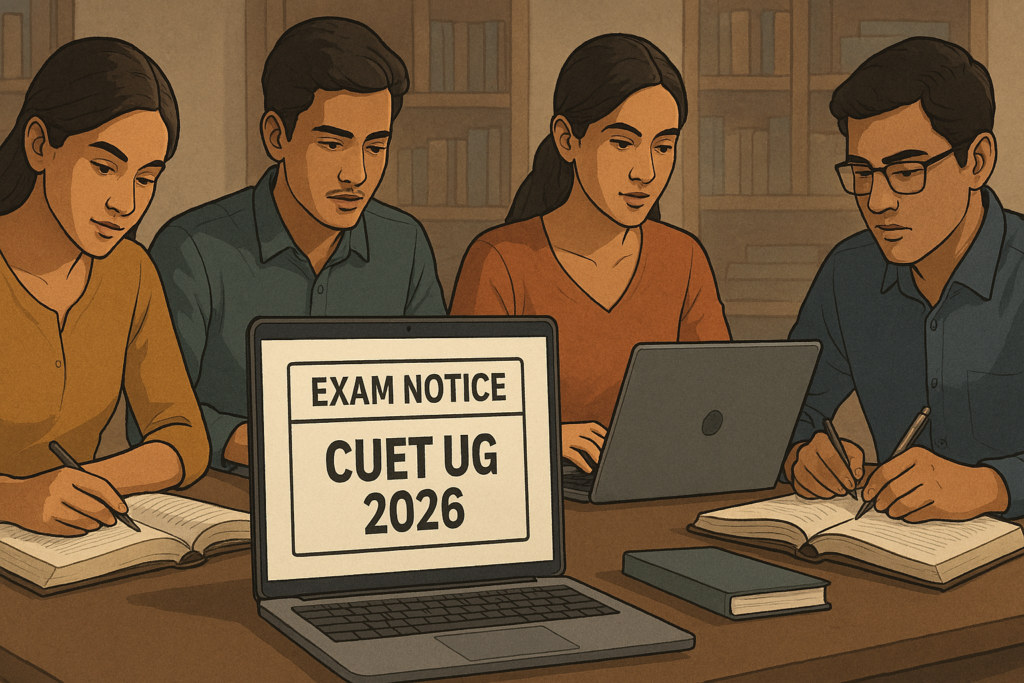
How to Strategically Respond to NTA’s Advisory and Crack the May Exam
After understanding why the NTA advisory matters (Part 1), the real question is what to do next. This part focuses on execution—how aspirants should convert the advisory into a concrete preparation and compliance strategy for the CUET UG 2026 May exam.
This is where selection is decided.
Reading the Advisory Like a Serious Aspirant (Not a Casual Candidate)
Most students read advisories. Very few interpret them.
What Toppers Actually Look For
What NTA is emphasizing repeatedly
What instructions are unusually detailed
What actions are expected before the exam
Expert Insight:
If NTA clarifies something early, it’s usually because ignoring it earlier caused large-scale issues.
Strategic Preparation Model for CUET UG 2026 (Post-Advisory)
Instead of generic study plans, CUET UG demands a balanced academic + procedural strategy.
The 3-Pillar CUET UG Model
Concept Accuracy – Clear fundamentals in chosen subjects
Speed & Adaptability – CBT-style thinking
Process Discipline – Form, documents, instructions
Ignoring even one pillar weakens overall performance.
Subject-Wise Planning: Where Most Aspirants Misjudge
CUET UG is not about studying more subjects—it’s about studying the right ones correctly.
Smart Subject Strategy
Focus on NCERT-aligned concepts
Identify high-frequency question areas
Practice mixed-difficulty questions
Many aspirants waste time mastering low-weight topics while ignoring scoring areas.
Time Management Inside the Exam Hall
One of the silent killers in CUET UG is poor section-wise time allocation.
A Practical Exam-Time Approach
First round: Attempt confident questions
Second round: Moderate difficulty
Final minutes: Review marked questions
This reduces panic and improves accuracy.
CBT Familiarity: The Deciding Advantage
CUET UG 2026 is fully computer-based. Familiarity matters more than students admit.
Why CBT Practice Changes Outcomes
Reduces screen anxiety
Improves navigation speed
Minimizes silly mistakes
Students new to CBT often lose 10–15% potential marks—not due to knowledge, but hesitation.
Case Study: Two Students, Same Syllabus, Different Results
| Factor | Student X | Student Y |
|---|---|---|
| Advisory Awareness | Thorough | Ignored |
| CBT Practice | Regular | Minimal |
| Subject Strategy | Focused | Random |
| Exam-Day Stress | Low | High |
| Final Outcome | Admission Secured | Missed Cut-off |
This difference is strategic, not intellectual.
Using the Advisory as a Psychological Advantage
Most candidates panic after advisories. Smart candidates feel relieved.
Why?
Because clarity:
Reduces uncertainty
Improves planning confidence
Creates psychological readiness
Confidence built on clarity always outperforms blind optimism.
How CUET UG 2026 Rewards Consistency Over Brilliance
Unlike board exams, CUET doesn’t reward:
Lengthy answers
Partial understanding
Emotional performance
It rewards:
Accuracy
Speed
Consistency
A calm, average student with discipline often beats a brilliant but careless one.
Frequently Asked Questions (FAQs)
1. Is the NTA advisory compulsory to follow for CUET UG 2026?
Yes. Advisories clarify mandatory expectations and exam-day rules.
2. Does ignoring an advisory affect exam performance?
Indirectly, yes—procedural issues and stress reduce performance.
3. Is CUET UG tougher than board exams?
Yes. CUET tests application and speed, not descriptive writing.
4. How early should CBT practice begin?
At least 2–3 months before the exam.
5. Are NCERT books sufficient for CUET UG 2026?
For concepts, yes—but practice questions are essential.
6. Can advisory instructions change later?
Minor updates may occur, but early compliance is safest.
7. Does subject selection really affect admission chances?
Absolutely. Wrong combinations can block eligibility.
8. What is the biggest advantage of following the advisory early?
Reduced stress and better focus on performance.
Conclusion
The CUET UG 2026 advisory issued by NTA ahead of the May exam is not just informational—it’s directional.
Candidates who:
Respect official instructions
Prepare strategically
Practice CBT seriously
…place themselves far ahead of the crowd.
In CUET, discipline beats desperation.
Call to Action (CTA)
If you’re appearing for CUET UG 2026, don’t wait for panic to force preparation.
Read advisories carefully. Plan deliberately. Practice consistently.
One calm, well-planned attempt can secure a seat that thousands chase blindly.