This detailed guide explains what the NABARD Young Professional Programme 2025 really offers, who it is best suited for, how it differs from typical government jobs, and why many eligible candidates still miss out. You’ll also learn actionable steps, real-life scenarios, common mistakes, and expert insights to help you decide whether this programme aligns with your long-term career goals.

Table of Contents
Introduction: Not Just Another Application Form
When most aspirants hear that NABARD Young Professional Programme 2025 applications are open, the first reaction is predictable:
“It’s contractual… maybe not worth it.”
That single assumption has caused thousands of capable graduates to ignore one of the most career-defining entry points into India’s rural development ecosystem.
This programme is not about short-term employment. It’s about exposure, credibility, and positioning—three things early-career professionals often lack but desperately need.
Understanding NABARD’s Intent Behind the Young Professional Programme
To understand this programme, you must first understand NABARD itself.
NABARD is not a routine government body. It is:
A policy-influencing institution
A bridge between rural realities and national financial planning
A think tank for agriculture, MSMEs, and rural infrastructure
The Young Professional Programme exists because NABARD needs:
Fresh academic perspectives
Ground-level analytical support
Professionals who can translate policy into practice
This is why the programme emphasizes skill, adaptability, and insight, not just exam scores.
Why NABARD Young Professional Programme 2025 Is Different from Regular Govt Jobs
Many aspirants wrongly compare this programme with permanent posts. That comparison is flawed.
Key Difference in Approach
Permanent jobs test memory and consistency
Young Professional roles test thinking, execution, and adaptability
Expert Insight:
This programme is closer to a policy fellowship than a clerical or administrative role.
A Realistic Scenario: Who Benefits Most from This Programme
Consider two graduates:
Candidate A
Strong academic background
Wants real-world exposure
Interested in policy, development, or finance
Candidate B
Only wants job security
Dislikes fieldwork or analysis
Avoids short-term roles
The programme is designed entirely for Candidate A. Candidate B often applies—and regrets it later.
What the NABARD Young Professional Programme 2025 Actually Offers
Beyond stipend and tenure, the real value lies elsewhere.
Hidden Benefits
Direct exposure to NABARD’s working culture
Understanding of rural credit systems
Hands-on involvement in developmental projects
Professional credibility for future roles
Many alumni of similar programmes later move into:
International development organizations
Government advisory roles
Higher studies with strong profiles
Data Insight: Why Such Programmes Are Becoming More Common
Across government and PSU ecosystems:
Short-term professional programmes are increasing
Skill-based roles are replacing entry-level clerical posts
Exposure-heavy positions act as talent pipelines
This shift signals where public-sector hiring is heading, not where it was.
Actionable Steps Before Applying (Critical Section)
Before clicking “Apply,” serious candidates should:
Evaluate long-term career alignment
Assess readiness for analytical and field-based work
Prepare documents carefully
Understand role expectations beyond job title
Applying blindly wastes both time and opportunity.
Common Mistakes Candidates Make (CRITICAL SECTION)
Mistake 1: Applying Without Understanding the Role
Many applicants apply just because the name “NABARD” sounds prestigious.
Result: Mismatch, dissatisfaction, and early exit.
Mistake 2: Treating It as a Backup Job
This programme demands commitment. Treating it casually reflects poorly during selection.
Mistake 3: Underestimating Skill Expectations
Young Professionals are expected to:
Analyze data
Draft reports
Support policy-level work
This is not a passive role.
Mistake 4: Ignoring Long-Term Value
Candidates focus only on tenure and stipend, ignoring exposure and networking value.
Mistake 5: Poor Application Quality
Generic applications signal low seriousness—even if eligibility is met.
Case Comparison: Strategic Applicant vs Casual Applicant
| Factor | Strategic Applicant | Casual Applicant |
|---|---|---|
| Role Understanding | Clear | Vague |
| Application Quality | Tailored | Generic |
| Career Vision | Defined | Unclear |
| Interview Readiness | Strong | Weak |
| Outcome | Shortlisted | Rejected |
This pattern is consistent across similar programmes.
Why NABARD Values Credibility Over Credentials
NABARD’s ecosystem values:
Experience
Domain understanding
Trustworthiness
The programme filters candidates who can grow into authority roles, not just fill seats.
Motivational Closing
Opportunities like the NABARD Young Professional Programme 2025 don’t change your career overnight—but they change your direction permanently.
The question isn’t whether it’s temporary.
The question is whether it’s transformational.
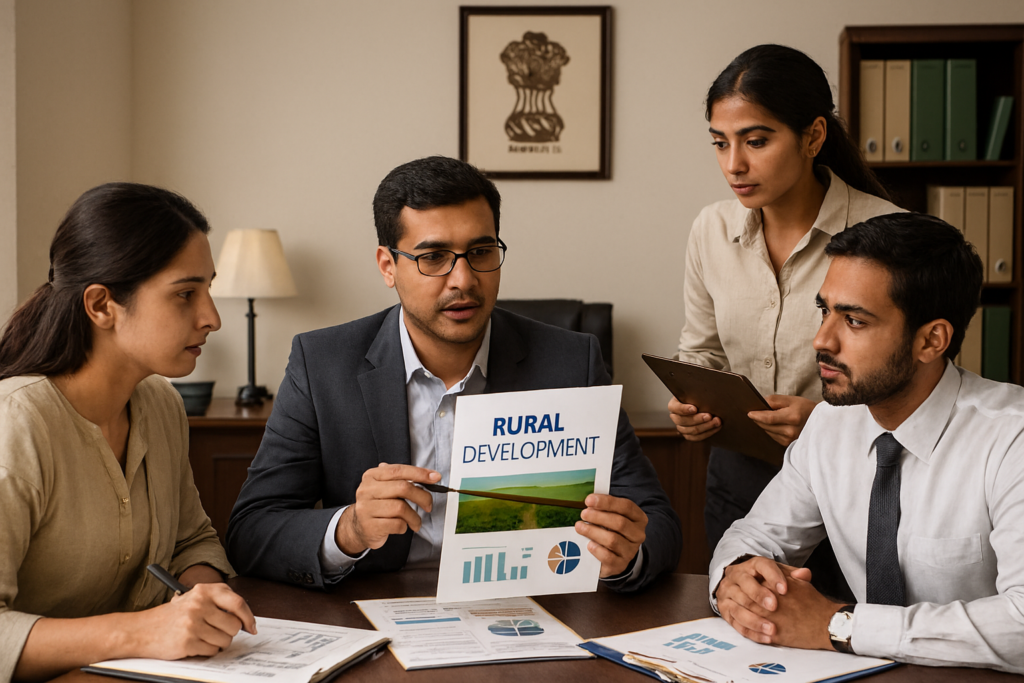
Who Should Apply for NABARD Young Professional Programme 2025 (And Who Should Not)
Before discussing strategy, it’s important to answer one uncomfortable truth:
This programme is not for everyone.
You SHOULD Apply If:
You want policy-level exposure in rural development, agriculture, finance, or MSMEs
You plan to pursue higher studies, fellowships, or research-based careers
You are comfortable with analysis, documentation, and field-level understanding
You want NABARD on your CV as a credibility multiplier
You Should AVOID Applying If:
You are only looking for permanent government job security
You dislike report writing, data interpretation, or stakeholder interaction
You expect fixed routines and minimal responsibility
Expert Reality Check:
Candidates who align with the programme’s intent perform better and gain far more than those who apply “just in case”.
How Selection Panels Think (Insider-Level Insight)
Selection is not about “who knows the most facts”.
Panels usually assess:
Clarity of purpose
Understanding of NABARD’s role
Ability to connect theory with ground reality
Long-term potential, not short-term convenience
What Impresses the Panel
Clear articulation of interest in rural development
Awareness of current challenges in agriculture & credit systems
Logical thinking, not memorized answers
Strategic Preparation Framework (Actionable & Practical)
Step 1: Understand NABARD’s Ecosystem
Study:
Rural credit flow
Role of cooperatives and SHGs
Agricultural infrastructure financing
Step 2: Build a Narrative
Be ready to answer:
“Why this programme, and what will you do after it?”
A confused answer here weakens even strong profiles.
Step 3: Strengthen Analytical Thinking
Focus on:
Interpreting basic data
Linking policies to outcomes
Understanding rural challenges holistically
Example Scenario: How Smart Candidates Stand Out
Two candidates with similar qualifications appear before the panel.
One talks about salary, duration, and future exams
The other talks about learning outcomes, rural impact, and long-term relevance
The second candidate is remembered.
That’s the difference.
Why This Programme Adds Long-Term Career Value
Even after the tenure ends, alumni benefit through:
Strong recommendation potential
Better chances in fellowships and policy roles
Clear advantage in interviews where “practical exposure” matters
Trend Observation:
Recruiters increasingly value hands-on policy exposure over purely academic credentials.
Comparing NABARD Young Professional Programme with Other Opportunities
| Aspect | NABARD YPP | Typical Entry Job |
|---|---|---|
| Exposure | High | Limited |
| Learning Curve | Steep | Slow |
| Policy Interaction | Direct | Minimal |
| Career Leverage | Strong | Moderate |
This comparison explains why many professionals later say:
“I didn’t realize its value until much later.”
Frequently Asked Questions (FAQs)
1. Is NABARD Young Professional Programme 2025 a permanent job?
No. It is a contractual professional engagement focused on skill and exposure.
2. Does this programme help in future government or policy roles?
Yes. It significantly strengthens profiles for policy, research, and development-sector careers.
3. Is prior experience mandatory?
Not always, but relevant academic or practical exposure is a strong advantage.
4. Is fieldwork compulsory?
Depending on assignment, some level of field exposure is usually involved.
5. Can fresh graduates apply for NABARD Young Professional Programme 2025?
Yes, provided they meet eligibility and demonstrate clarity of purpose.
6. How competitive is the selection process?
Moderately high. Serious applicants with clarity stand out quickly.
7. Does this programme help in higher studies or fellowships?
Absolutely. It adds real-world credibility to academic profiles.
8. Is the experience valued outside NABARD?
Yes. Many development organizations and institutions value this exposure.
Conclusion: The Real Question You Should Ask Yourself
The NABARD Young Professional Programme 2025 is not about:
Comfort
Permanence
Short-term stability
It is about:
Direction
Exposure
Long-term positioning
If your career goals involve policy, development, finance, or governance, this programme can act as a launchpad, not just a job.
Call to Action (CTA)
Before applying, ask yourself one honest question:
“Am I looking for a job—or am I building a career?”
If it’s the second, don’t ignore this opportunity lightly.